Spring Is Coming — Is Your Pool Ready?
If you’re a pool owner in Southwest Ohio, you know the feeling. The weather starts warming up in late March, the kids start asking when the pool will be open, and suddenly you’re staring at a covered pool wondering what’s lurking underneath.
The good news: a little preparation now saves you a lot of headaches (and money) later. Here are five things every homeowner in the Cincinnati area should do before opening their pool this spring.
1. Inspect Your Winter Cover Before Removing It
Before you start pulling the cover off, take a few minutes to actually look at it. Check for tears, sagging, or areas where debris and standing water have collected. If there’s a lot of standing water on top, use a cover pump to remove it before you try to pull the cover — otherwise you’ll dump all that dirty water right into your pool.
Once the cover is off, clean it thoroughly with a garden hose, let it dry completely, and fold it for storage. A clean, dry cover lasts years longer than one that gets thrown in a corner while still wet.
Pro tip: If your cover has significant tears or doesn’t fit snugly anymore, now is the time to order a replacement — not in September when everyone else is trying to buy one.
2. Check Your Equipment Before You Power It Up
Don’t just flip the breaker and hope for the best. Before reconnecting power to your pump, filter, heater, or salt system, do a visual inspection:
- Look for cracks on the pump housing, filter tank, and any PVC fittings.
- Check o-rings and gaskets — these dry out over winter and are a common source of leaks.
- Inspect electrical connections for corrosion, rodent damage, or loose wires.
- Make sure all drain plugs are reinstalled in the pump, filter, and heater before adding water.
A cracked pump housing or a missing drain plug might seem minor, but turning on your system without catching these issues can cause hundreds of dollars in damage in minutes.
3. Clean the Pool Before Adding Chemicals
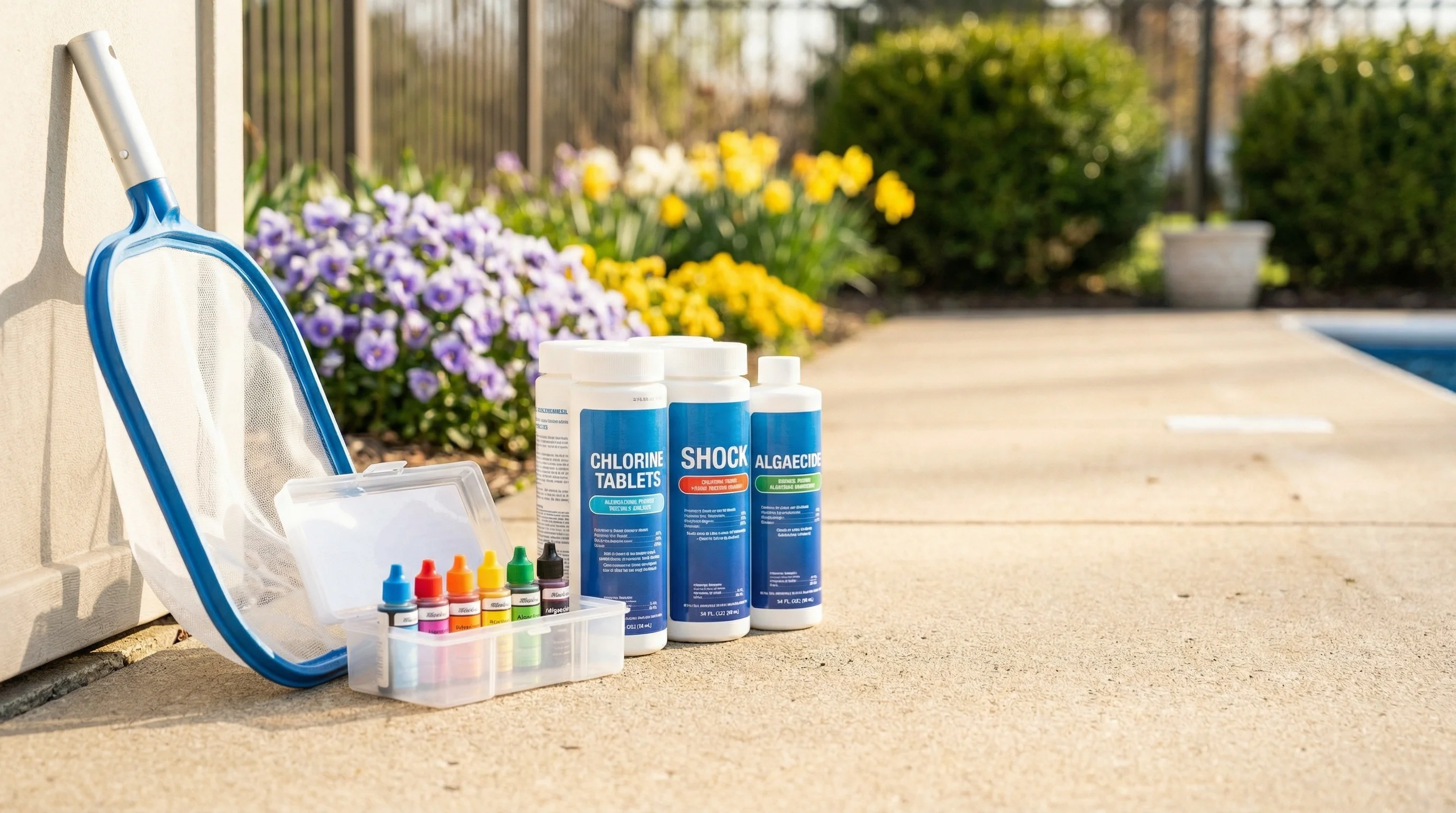
Resist the urge to dump a bunch of shock and algaecide into murky water and call it a day. Start with the basics:
- Skim the surface to remove leaves, bugs, and debris.
- Brush the walls and floor — especially around steps, corners, and the waterline where algae starts.
- Vacuum the bottom to remove anything that settled over winter.
Getting the pool physically clean first means your chemicals actually work on treating the water instead of fighting through a layer of organic matter. You’ll use less product and get clear water faster.
4. Test and Balance Your Water Chemistry
Once the pool is clean and the pump is running, test your water. You can use a home test kit or bring a sample to your local pool supply store. Here’s what you’re looking for:
- pH: 7.2 - 7.6 (ideal is 7.4)
- Total Alkalinity: 80 - 120 ppm
- Calcium Hardness: 200 - 400 ppm
- Free Chlorine: 1 - 3 ppm
Adjust alkalinity first, then pH, then calcium hardness, then sanitizer. Doing it in this order prevents you from chasing numbers in circles. If your water has been sitting all winter, you may need to shock it with a higher dose of chlorine initially to kill any bacteria or algae spores.
Ohio-specific note: Our water in the Greater Cincinnati area tends to run on the harder side. If your calcium hardness is already high coming out of winter, adding more calcium-based products can cause scaling on your equipment. Test first, adjust second.
5. Run the System for 24 Hours and Recheck
After balancing your chemicals, let the pump and filter run continuously for at least 24 hours. This circulates the treated water through the entire system, filters out particulates, and gives you a chance to check for leaks, unusual noises, or pressure issues.
After 24 hours:
- Retest your water — levels often shift after the first full circulation.
- Check the filter pressure gauge — note the clean baseline so you know when it’s time to backwash or clean later in the season.
- Inspect around all fittings for any drips or seepage.
If everything looks good, you’re ready to swim.
When to Call a Professional
If any of the following apply, it’s worth having a professional handle your opening:
- You see visible damage to equipment or plumbing
- Your water is dark green or black (not just cloudy)
- You’re not comfortable reconnecting electrical components
- The pool has been closed for more than one season
- You just want it done right without the hassle
At Aquascapes, we’ve been opening pools across Southwest Ohio for over 20 years. We handle everything from cover removal to chemical balancing, and we’ll walk you through anything we find during the inspection.
Don’t Wait Until May
Every year, we get a rush of calls in late April and May from homeowners who waited too long. By then, our schedule is packed and some folks end up waiting weeks to get their pool opened. The smart move is to call in February or March and get on the calendar early.
Ready to schedule your spring pool opening? Call Aquascapes at (513) 548-4253 or fill out our contact form. We serve Mason, Loveland, West Chester, Lebanon, Maineville, Cincinnati, and surrounding areas.